There’s a point when bottled water starts to feel like a ridiculous habit. You buy a case, carry it into the house, stack it somewhere, and then somehow you’re back at the store buying another one a week later. Meanwhile, perfectly usable water is already coming through the kitchen faucet.
For many homeowners, the answer isn’t necessarily more bottled water. It’s finding a treatment system that makes the water coming into the home more enjoyable and suitable for everyday drinking.
But water treatment isn’t one-size-fits-all. The right approach depends on what’s in your water, what you want to improve, and how much maintenance you’re willing to handle.
Start With What You Actually Need
Before choosing equipment, think about the problem you’re trying to solve.
Is the water heavily chlorinated? Does it have a metallic or sulfur-like taste? Are there mineral deposits around the faucets? Maybe the water looks fine but simply doesn’t taste great.
These details matter because different treatment technologies are designed for different jobs.
A professional water test can provide useful information about hardness, pH, iron, sulfur, sediment, and other characteristics. Once you know what’s happening, choosing a system becomes much easier.
Without that information, you’re mostly guessing.
Why Drinking Water Systems Are So Popular
Modern drinking water systems can provide treated water directly where you need it most — usually at the kitchen sink.
This point-of-use approach makes sense for households that primarily want better water for drinking and cooking rather than treating every gallon used throughout the property.
Depending on the system, treatment may involve carbon filtration, reverse osmosis, or multiple filtration stages.
The advantage is convenience. Instead of buying bottles, you can fill a reusable glass or bottle directly from your faucet.
Over time, that can be a surprisingly satisfying change.
What Does Purified Water Really Mean?
The term “purified” gets used a lot in water treatment advertising, but it can mean different things depending on the technology being used.
In general, purified water has gone through a treatment process intended to reduce certain impurities or contaminants. The exact result depends on the filtration method, membrane, incoming water quality, and system design.
For example, activated carbon is useful for improving taste and reducing chlorine, while reverse osmosis can reduce a broader range of dissolved substances.
That’s why it’s worth asking a simple question when evaluating a system: purified from what?
A good water treatment professional should be able to answer that clearly.
Reverse Osmosis for the Kitchen
Reverse osmosis is particularly popular for households that want a higher level of treatment for drinking and cooking water.
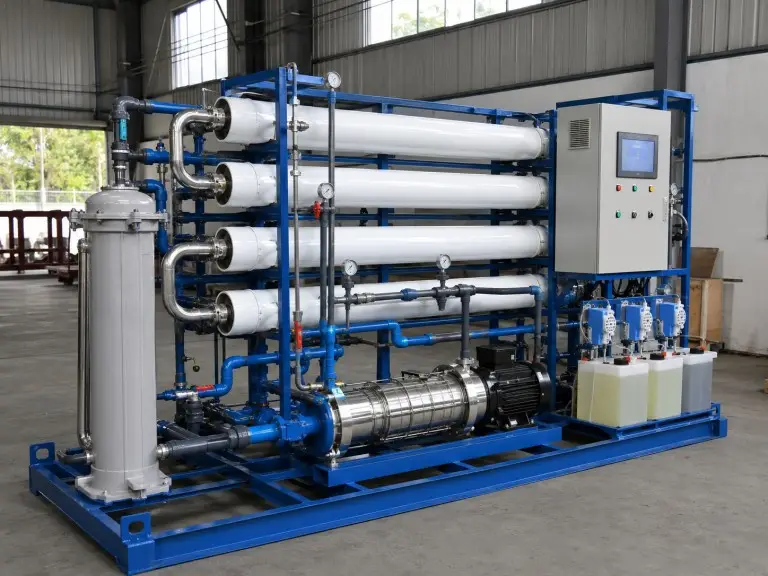
The process pushes water through a semi-permeable membrane under pressure. Many dissolved substances are reduced during the process, leaving treated water that can have a noticeably different taste.
A reverse osmosis system may also include pre-filters to protect the membrane and a post-filter to improve the final taste.
If your household is considering a Reverse Osmosis Special, don’t focus only on the number of filtration stages or a promotional discount. Look at the membrane quality, replacement costs, water efficiency, storage capacity, and service requirements.
A bargain system isn’t much of a bargain if replacement parts are difficult to find.
Taste Is a Bigger Deal Than It Sounds
People often talk about water quality as though it’s purely a technical issue.
It isn’t.
Taste matters.
If your tap water has an unpleasant chlorine or mineral flavor, you may naturally drink less of it. You might buy bottled water for work, keep several cases in the garage, or constantly fill pitchers and refrigerate them.
Improving taste can make tap water much more appealing.
And when the water tastes better, other drinks can benefit too. Coffee, tea, ice cubes, and even homemade lemonade can taste noticeably different when made with better water.
Small improvement, big convenience.
Choosing Between Point-of-Use and Whole-House Treatment
A drinking-water system isn’t necessarily the same thing as a whole-house filtration system.
Point-of-use treatment focuses on specific faucets, generally in the kitchen. It’s a practical option when drinking and cooking are your primary concerns.
Whole-house treatment addresses water as it enters the property, which can make sense if you’re dealing with hard water, sediment, odor, or other concerns throughout the home.
Some households may benefit from both: whole-house treatment for general water quality and a dedicated RO system for drinking water.
The best setup depends on the test results and your priorities.
Maintenance Should Be Part of the Decision
One thing that doesn’t get enough attention during the buying process is maintenance.
Every filtration system needs it.
Filters eventually need replacement. RO membranes have a service life. Connections should be checked, and certain components may need periodic servicing.
Ask about these costs before buying.
A reputable provider should be able to tell you how often filters should be changed, what replacement parts cost, and whether professional maintenance is recommended.
It’s better to know upfront than discover the details six months later.
Don’t Buy Based on Marketing Alone
Water treatment companies can make impressive claims. So can online retailers.
But a flashy product description doesn’t tell you whether a system is right for your home.
Start with your water quality. Consider your household size and daily usage. Think about installation space and long-term maintenance.
Then compare systems based on actual performance and suitability.
The best system isn’t necessarily the newest one or the one with the longest feature list. It’s the one that quietly does what you need.
Better Water Without the Bottles
At its heart, home water treatment is about convenience and confidence.
You want to turn on the tap and know that the water you’re using fits the needs of your household. You want to make coffee without wondering why it tastes different. You want to fill a reusable bottle without making another trip to the supermarket.
The right drinking-water system can make those ordinary moments easier.
So start with testing, understand your options, and choose treatment technology based on real needs rather than hype.
Good water doesn’t need to be complicated. Sometimes, the best upgrade is simply making the water you already have work better for your life.