Most homeowners pay attention to their roof when shingles start looking worn or a leak appears on the ceiling. Gutters, on the other hand, are easy to forget. They sit along the edge of the roof, quietly collecting rainwater and directing it away from the house. As long as water seems to flow where it should, everything feels fine. But when gutters stop doing their job, the consequences can reach much further than a few puddles near the driveway.
A dependable gutter system protects the roofline, exterior walls, landscaping, and foundation from unnecessary moisture. It also helps prevent water from collecting around doors, windows, and other vulnerable areas. Keeping gutters in good condition doesn’t require complicated routines, but it does take a little attention throughout the year.
What Gutters Actually Do During Heavy Rain
When rain falls on a roof, thousands of litres of water can move toward the edges during a single storm, depending on the roof’s size and rainfall intensity. Gutters collect that runoff and carry it toward downspouts, which release the water at a safer distance from the building.
Without an effective drainage system, water may spill over the roofline and run down exterior walls. Over time, repeated exposure can contribute to peeling paint, damaged siding, stained brickwork, and moisture entering small gaps around windows or doors. Water that collects near the foundation may also increase the risk of basement dampness or soil erosion.
Gutters are especially important when the ground around a house slopes toward the building. Even a relatively small drainage problem can become noticeable after several hours of steady rain. You might see muddy channels in the garden, overflowing flower beds, or water pooling beside the foundation.
These signs aren’t always caused by gutters alone, but they’re worth investigating. Effective drainage depends on the condition of the gutters, the placement of downspouts, and the way water moves across the property.
Getting the Installation Right From the Beginning
A gutter system needs to fit the building rather than simply look attractive from the street. Roof size, pitch, local rainfall, and the number of roof valleys all influence how much water the system must handle. A design that works well on a small bungalow may not be suitable for a larger home with several roof sections.
Professional gutter installation begins with measuring the roofline and determining the appropriate gutter size, material, slope, and downspout placement. The gutters need a slight, carefully planned fall so that water moves toward the outlets instead of sitting in the channels. Too little slope can encourage standing water, while poor alignment may cause overflow during heavy rain.
Material choice matters as well. Aluminium is popular because it is relatively lightweight and resistant to rust. Galvanised steel offers strength, while copper can provide a distinctive appearance and long service life at a higher initial cost. Vinyl gutters may suit certain budgets and climates, although their performance can vary with temperature changes and exposure.
There isn’t one perfect material for every property. The best choice depends on local weather, the home’s design, maintenance expectations, and how long you plan to stay in the house.
It’s also worth asking the installer about secure brackets, properly connected joints, and downspouts that discharge water away from the foundation. These details may seem minor during installation, yet they make a noticeable difference when the first major storm arrives.
Small Problems Shouldn’t Be Left to Grow
Gutters are exposed to wind, falling branches, temperature changes, and the weight of accumulated debris. Over time, brackets can loosen, joints may separate, and sections can begin to sag. A small leak at one connection might seem harmless, but repeated dripping can stain exterior surfaces and contribute to wood deterioration.
Timely gutter repair can often address these problems before a complete replacement becomes necessary. Depending on the damage, the work may involve tightening or replacing hangers, resealing a leaking joint, correcting the gutter slope, or replacing a short damaged section.
Watch for water spilling over the sides during ordinary rainfall, visible gaps between gutter sections, rust spots, and downspouts that have become disconnected. If water remains in a gutter long after the rain stops, the system may be blocked or improperly sloped.
Not every issue can be fixed with sealant. A badly corroded section or a gutter that has pulled away from the fascia may need more substantial attention. Repeatedly patching the same failing area can become frustrating and expensive, so ask a professional to assess the overall condition before deciding what to do.
Safety deserves a mention here. Gutters are often positioned above uneven ground, steps, or garden beds. If repairs require working at height, hiring an insured professional is generally safer than attempting the job from an unstable ladder.
Why Regular Cleaning Is Worth the Effort
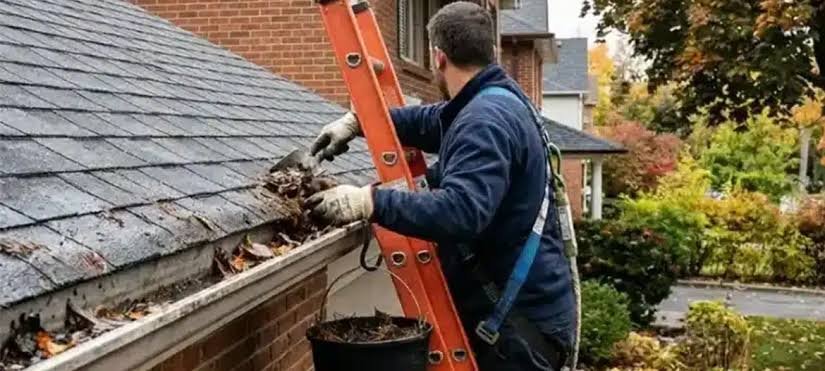
Leaves, pine needles, roof granules, and small twigs gradually build up inside gutters. In areas with mature trees, the accumulation can happen surprisingly quickly, particularly during autumn or after strong winds. Once the debris blocks water flow, even a well-installed system may begin overflowing.
Routine gutter cleaning removes this buildup and allows rainwater to reach the downspouts freely. For many homes, checking the gutters in spring and autumn is a useful starting point. Properties surrounded by trees may need more frequent attention, while homes with gutter guards still benefit from occasional inspections.
Look for signs such as plants growing in the channels, birds gathering around the roofline, or water spilling over during rain. These clues suggest that debris may be restricting the system.
Cleaning also provides an opportunity to spot early damage. You may notice a loose bracket, a separated joint, or a section that holds water. Finding these issues while clearing the gutters can save a separate visit later.
However, gutter guards aren’t a complete maintenance solution. They can reduce the amount of debris entering the channels, but small leaves, seeds, and roof grit may still accumulate. Their effectiveness depends on the design, the surrounding trees, and how the system was installed.
Don’t Forget the Downspouts and Ground Below
A clean gutter cannot protect a home if its downspouts are blocked. Water needs a clear route from the roof to a suitable discharge point. If a downspout becomes clogged, water may back up into the gutter and spill over the edge.
Check that downspout extensions remain connected and that water flows away from the foundation rather than collecting beside it. The right arrangement depends on the property, local drainage rules, and the slope of the ground. In some cases, an underground drainage line or rainwater collection system may be useful.
Pay attention to erosion, too. If water repeatedly falls onto bare soil, it can wash away mulch, damage plants, and create small channels in the garden. A simple extension or a properly designed drainage solution may help control the runoff.
Make Gutter Care Part of Your Home Routine
Gutter maintenance doesn’t need to become another overwhelming household task. Add a quick visual check to your seasonal home-care list, especially before periods of heavy rain. After major storms, look for detached sections, fallen branches, or signs that water is escaping where it shouldn’t.
Keep a record of repairs and installation details, including the material used and any warranty information. If you hire a contractor, ask what the estimate includes and whether the work covers brackets, joints, downspouts, and disposal of old materials.
Most importantly, don’t wait until water pours over the edge to investigate. A little prevention can protect landscaping, preserve exterior finishes, and reduce the chance of moisture-related damage.
Gutters may not be the most exciting feature of a house, but they earn their place every time it rains. With a suitable installation, timely repairs, and regular inspections, they can quietly do their job for years. That’s the real value of a well-maintained drainage system: fewer surprises, less avoidable damage, and a home that’s better prepared for whatever the weather brings.