
What actually keeps India’s energy systems running when the grid goes down?
It’s easy to point to solar panels, EVs, or massive infrastructure project, but the real backbone often sits quietly behind the scenes: lead-based energy storage. From backup power in telecom towers to batteries powering vehicles and solar systems, lead plays a far more critical role than most realise.
As India’s energy ecosystem continues to expand, the demand for reliable, cost-effective storage is only increasing, and this is exactly where lead recycling companies in India step in to keep the entire system running efficiently and sustainably.
The Backbone of Energy Storage: Lead
Lead is central to India’s energy infrastructure, primarily through lead-acid batteries. These batteries are widely used across:
- Automotive (OEM and replacement markets)
- Telecom and data centres
- UPS and inverter systems
- Renewable energy storage (especially solar)
In fact, over 80% of lead consumption is linked to battery manufacturing. As India expands its renewable capacity and digital infrastructure, this demand is only expected to grow further.
What makes lead unique is its recyclability, allowing it to be reused multiple times without losing performance.
Recycling: The Primary Source of Lead Supply
India’s lead ecosystem is already heavily dependent on recycling:
- 85–90% of lead production comes from recycled sources
- Battery scrap alone accounts for nearly 80% of raw material input
- Recycled batteries contribute 50–60% of the country’s total lead supply
This makes lead recycling plant infrastructure not just important, but absolutely essential to maintaining supply continuity for the energy sector.
How Lead Recycling Supports India’s Energy Sector
1. Ensures Reliable Raw Material Supply
India’s energy systems depend on uninterrupted access to lead for battery production.
Lead recycling companies in India ensure a steady flow of refined lead and lead alloys by processing used batteries and scrap materials. This reduces reliance on imports and stabilises supply chains for manufacturers.
2. Powers Renewable Energy Growth
As India invests heavily in solar and other renewable sources, energy storage becomes critical.
Lead-acid batteries remain a cost-effective and reliable solution for storing solar energy, especially in large-scale and backup applications. Efficient lead recycling plants ensure that this demand can be met sustainably.
3. Enables Circular Resource Utilisation
Lead is one of the few metals that can be recycled indefinitely without degradation.
Through structured collection and processing by lead scrap buyers and recyclers, used batteries are converted back into high-purity lead, creating a closed-loop system. This is a key pillar of India’s circular economy ambitions.
4. Reduces Environmental Impact
Recycling lead is significantly more energy-efficient than extracting it from ore.
- Requires only about one-third of the energy compared to primary production
- Prevents hazardous battery waste from entering landfills
- Reduces risks of soil and water contamination
5. Supports Cost-Effective Energy Solutions
Lead-acid batteries remain one of the most affordable energy storage options, especially for large-scale and backup applications.
Recycled lead is approximately 5% cheaper than primary lead, helping manufacturers keep costs competitive. This affordability is essential for sectors like telecom, rural electrification, and distributed solar systems.
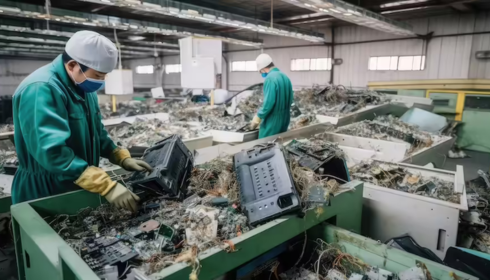
Inside a Modern Lead Recycling Plant
A well-functioning lead recycling plant follows a structured, multi-stage process:
- Collection: Used batteries are sourced from automotive, industrial and household channels
- Disassembly: Batteries are safely broken down into components
- Segregation: Lead, plastic, and electrolyte are separated
- Smelting: Lead is melted and purified
- Refining: Impurities are removed to achieve industrial-grade quality
- Casting: Refined lead is converted into ingots for reuse
At every stage, emission control systems and waste management practices ensure minimal environmental impact.
The Need for Organised Recycling
India currently has over 672 registered lead recycling units, with a combined capacity of 3.53 million tonnes. However, 30–35% of demand is still met by unorganised players, highlighting a gap in compliance and efficiency.
This creates a strong need for:
- Licensed and compliant recyclers
- Advanced processing infrastructure
- Transparent sourcing and traceability
- Reliable lead scrap buyers networks
The shift towards organised recycling is essential to ensure safety, quality, and sustainability across the value chain.
Strengthening the Ecosystem
Lead recycling companies in India are not just waste processors; they are critical enablers of the country’s energy future. By ensuring steady supply, reducing environmental impact, and supporting cost-effective solutions, they play a foundational role in powering growth.
As the ecosystem continues to mature, established players like Jain Resource Recycling are contributing to this shift by strengthening organised recycling capabilities, improving processing efficiencies, and supporting the broader transition towards compliant, large-scale operations.
As demand for energy continues to rise, the importance of efficient, compliant, and scalable lead recycling plant systems and trusted lead scrap buyers will only become more central to India’s journey towards a sustainable and resilient energy ecosystem.